Keynotes
CAPAL Conference 2026 keynotes
opening Keynote
9:30-10:45AM MONDAY, JUNE 22, 2026
MITA WILLIAMS
(Don & Gail Rodzik Library, University of Windsor)
Now Is The Time of Facing Monsters
This keynote will address the contemporary intersection of technology and academic libraries using the framework of Eric Zimmerman's Manifesto of the Ludic Century. Zimmerman argues that games are the definitional cultural form of the 21st century and that the logic of games will increasingly shape culture.
Games are like libraries - interesting, beautiful, and useless -- useless until animated by others who decide to join in. Looking at the world through the lens of game design can be useful when exploring life with agentic systems, as games can be understood as an art form where agency itself is explored. Games allow us to explore systems that are already familiar to us while allowing us to also explore and co-create new potential futures. The qualities that make play so joyful and generative are not unlike the qualities of what Ursula Franklin called holistic technologies: technologies that allow the individual to change rules and conditions to better fit their immediate needs. Games show us that we can find freedom within constraint through a ludic approach. Indeed, our collective planetary survival may depend upon our ability to accept limitations and to change ourselves rather than our environment. Games model technologies that afford consent, a feature tragically missing from the encroaching Ai infrastructures that are currently taking root. And gamification illustrates the dangers of when we unduly focus on the score instead of the play. The Great Derangement is upon us and libraries will need allies more than ever. This talk will share strategies on how to recruit them from games in libraries.
Now is the time of monsters. And games are where we can learn how to defeat them.
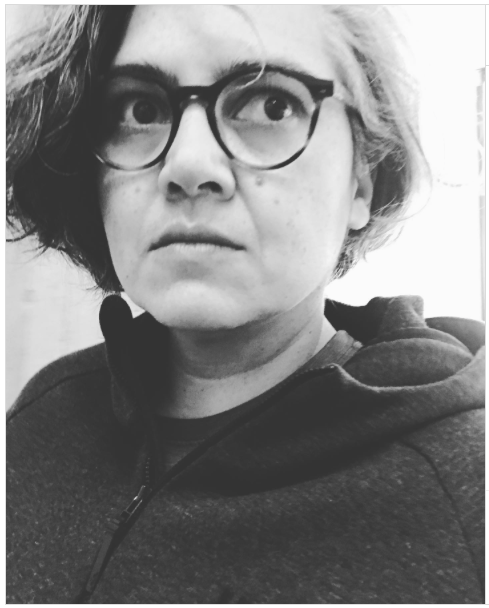
Mita Williams opening CAPAL Conference 2026 keynote!
ABOUT
After graduating from McMaster University with an Honours B.Sc in Geography and Environmental Science and acquiring a M.L.I.S. from McGill University, Mita was employed in a number of contract positions in public, corporate, non-profit, government, and academic libraries before joining the Leddy Library as Science Librarian in 1999. At the Leddy Library, she took on a number of roles including User Experience Librarian and Scholarly Communications Librarian and had held positions including the Head of the Information Services Department, Acting Head of Access Services, and Acting Head of Systems. From 2015-2018 and 2019-2020, she was a preceptor at the Windsor Campus of the Schulich School of Medicine. From September of 2022 to June 2024, Mita Williams was Acting Law Librarian for the Don & Gail Rodzik Library and in July, 2024 she was appointed as Law Librarian for a five-year term. In July 2025, she was promoted to Librarian IV.
She writes about librarianship and technology at Librarian of Things and shares interesting things through her newsletter, the University of Winds. She regularly adds Canadian legal data to Wikidata. A selective portfolio of her community work can be found at AedileWorks.com. She can be found on Bluesky, LinkedIN, and Mastodon/ActivityPub at copystar@social.coop
closing Keynote
4:00-5:30PM Tuesday, June 23, 2026
ALISSA CENTIVANY
(Faculty of Information & Media Studies, Western University)
The Fight to Fix: Lessons from the Front of the Right to Repair Movement
We are living through tough times, permeated by an increasing sense of breakdown, hopelessness, and loss of agency to fix many of the problems we collectively face. This talk will engage with this broad theme by focusing on the breakdown of our “things” and the Right to Repair movement growing in response. Across sectors, from consumer electronics and home appliances, to bikes, cars, and mobility devices, to the software-based systems we rely on in academic libraries and daily lives, to specialized medical, agricultural, and defence equipment, impediments to repair routinely thwart our ability to keep the things we already have working as they should. Our sociotechnical lives are simultaneously characterized by lock-in and lock-out, with seemingly few opportunities to meaningfully intervene when the devices and systems we rely on deteriorate and fall apart around us. How did we get here and what can we do to fix it as librarians? The Right to Repair movement offers some solutions and, more importantly, hope. The ability to fix our “things” is intricately connected to bigger questions about our ability to fix the political, economic, environmental, and social problems we face. The talk concludes with concrete recommendations for steps we can take, individually and collectively, to co-create a more humane, hospitable, and habitable shared future.

Alissa Centivany closing CAPAL Conference 2026 keynote!
ABOUT
Dr. Alissa Centivany is an Assistant Professor in the Faculty of Information and Media Studies at the University of Western Ontario working on technology policy, law, and ethics. She holds a PhD in Information and a JD specializing in intellectual property and technology law. Prior to joining Western, Dr. Centivany was a Microsoft Research Fellow at the Berkeley Center for Law and Technology, University of California-Berkeley School of Law, and a researcher at the Centre for Innovation Law and Policy, University of Toronto Faculty of Law. She was also an instructor at the iSchools of the University of Toronto and the University of Michigan. Dr. Centivany is a Fellow at Massey College, University of Toronto, during the 2026-7 academic year. Dr. Centivany is a founding co-director of the Starling Centre for Just Technologies & Just Societies, she is a co-chair and core expert in CIFAR and Mila's AI Insights for Policymakers Program (AIPP), is co-founder and executive director of the Canadian Repair Coalition, and is an active member of the Rotman Institute of Philosophy. Dr. Centivany provided expert testimony before the Canadian House of Commons and Senate, successfully advocating for reforms to Canada's Copyright Act, and is an active participant in Canadian policy consultations on a range of emerging technologies. Dr. Centivany's expertise is recognized internationally; she presented before the G20 and the United Nations, and has participated in U.S. and EU policy consultations. Dr. Centivany regularly shares her work with public audiences through public lectures and exhibit and through news media interviews with the CBC, Globe & Mail, Toronto Star, The National, Global News, The Agenda, and others. Her work is motivated by interdisciplinarity, curiosity, and care. In her spare time, she makes and enjoys art, tends to living things, plays pinball whenever possible, and occasionally (secretly) co-hosts a late-night college radio show.